*Animal Welfare Officer’s Course!*
Consists of:
*5 Modules*
1. Animals Protection Act Section 1 & 2.
2. Animal Health & Welfare
3. Animal Husbandry
4. Powers
5. Court Procedures
Time frame depends on each student, as to how fast they learn.
The course is a mixture of online and practicals.

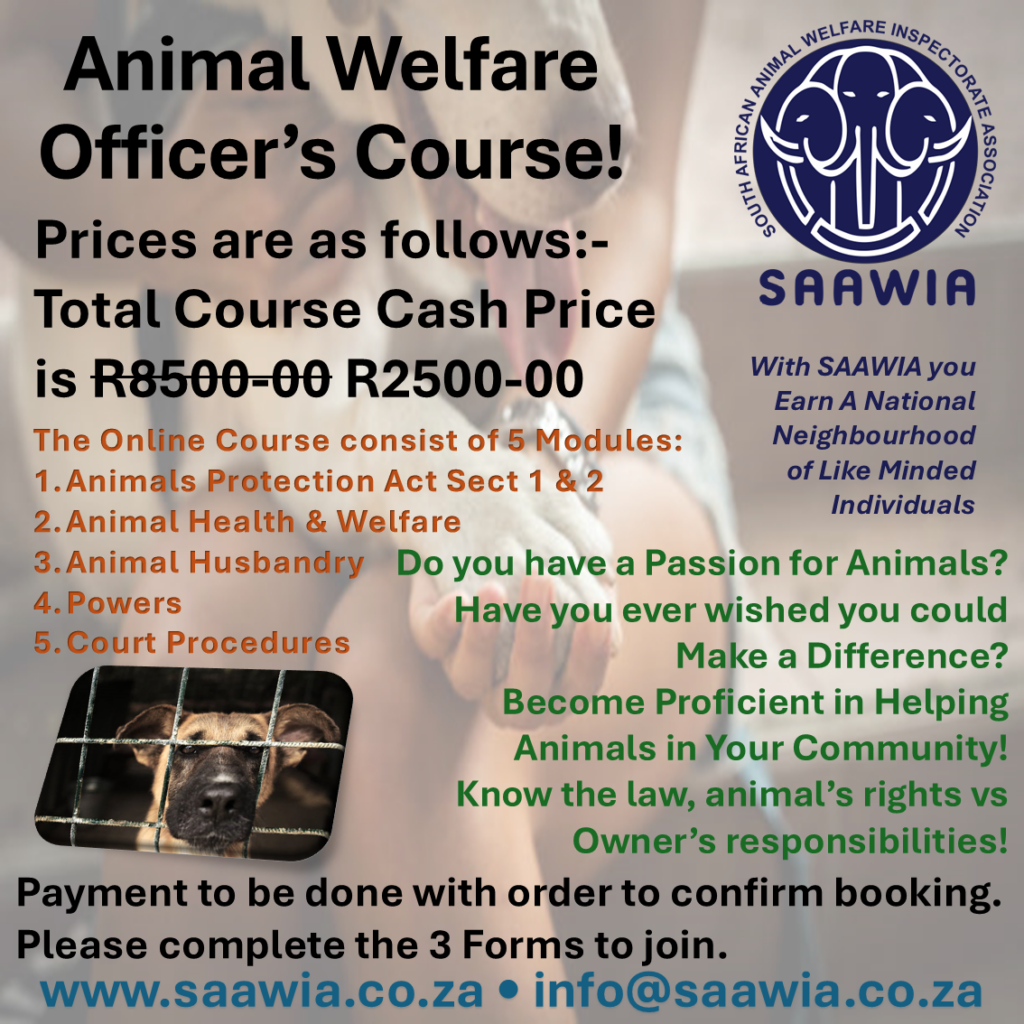
…Animal Welfare Officer’s Course!

Prices are as follows:-
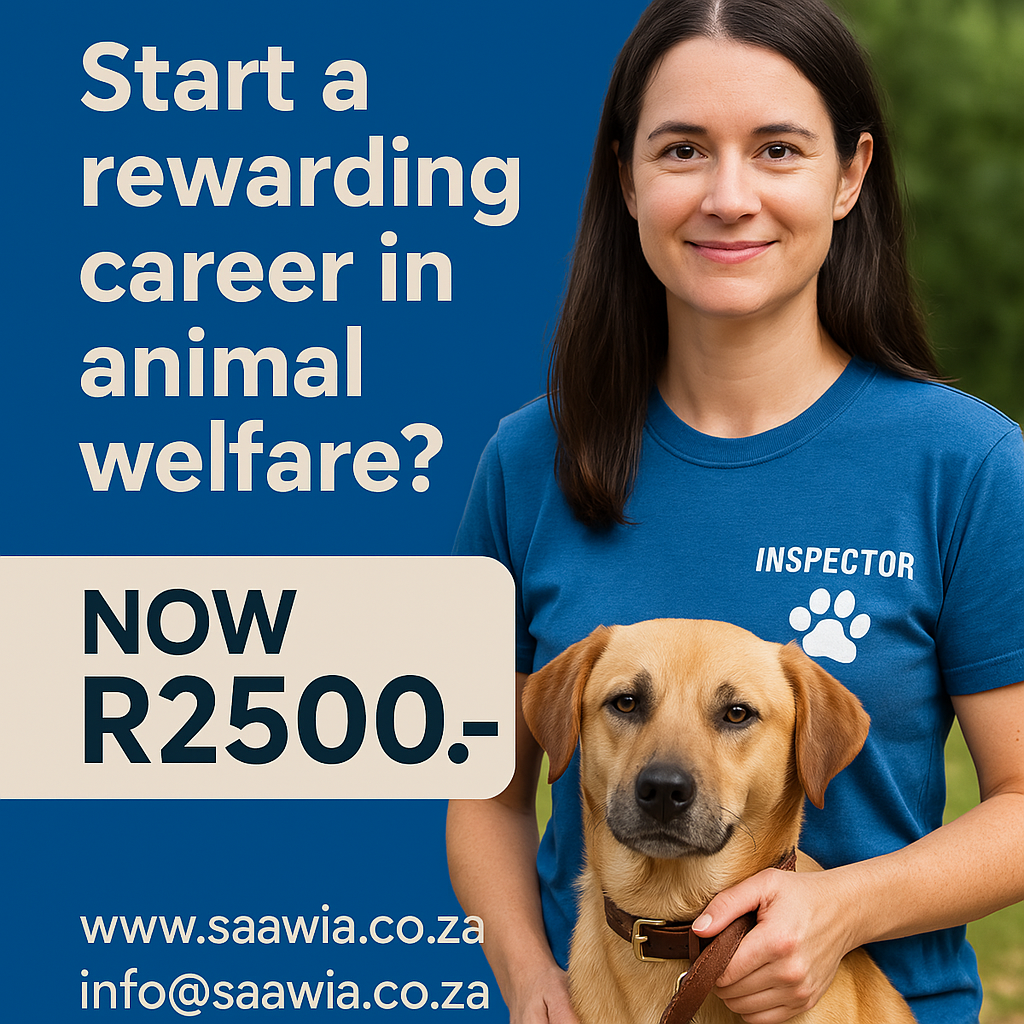
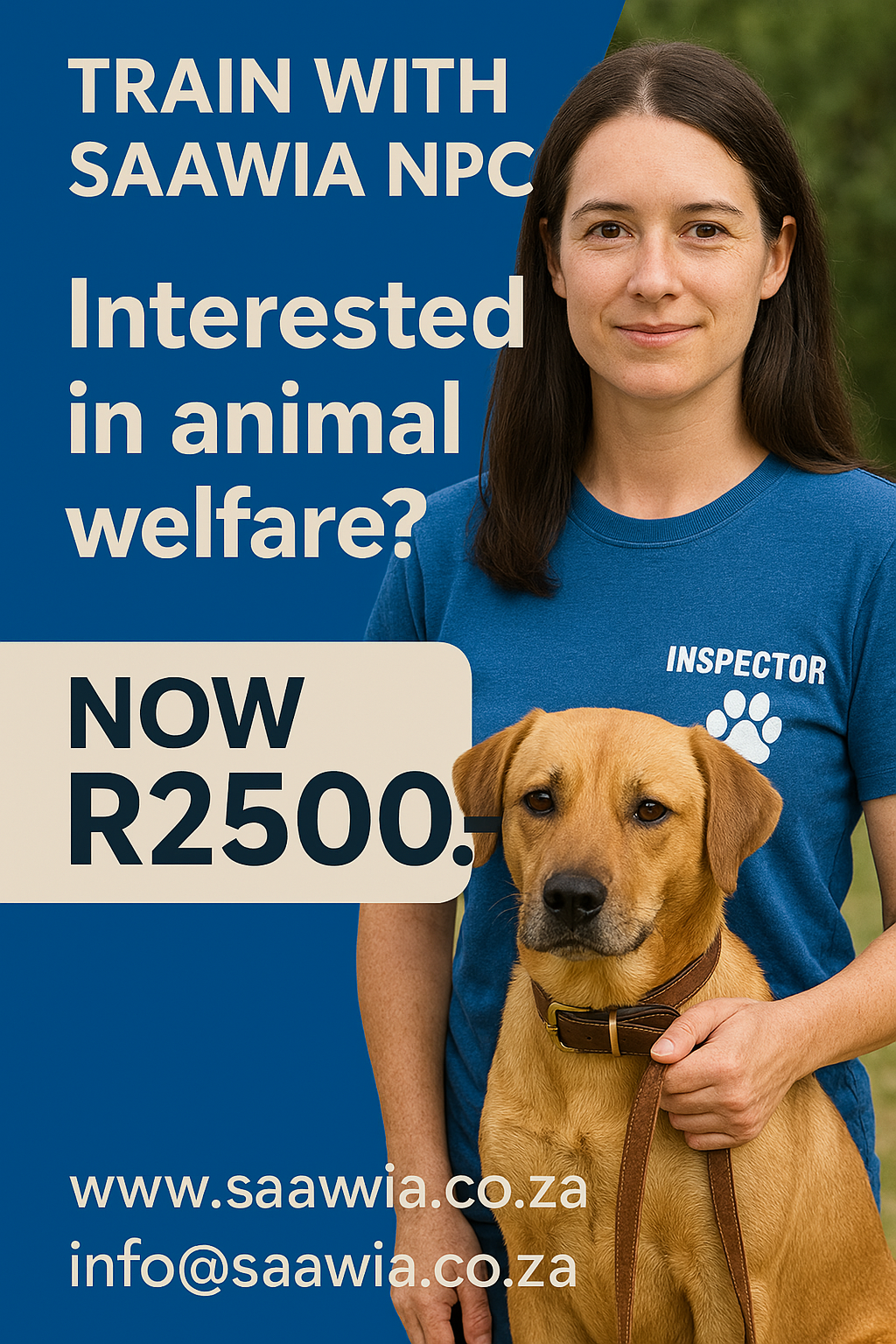
Total Course Cash Price is R2500-00
(Discounts apply for students of 4 or more from a place)

With SAAWIA you Earn A National Neighbourhood of Like Minded Individuals
Do you have a Passion for Animals?
Have you ever wished you could Make a Difference?
Become Proficient in Helping Animals in Your Community!
Know the law, animal’s rights vs Owner’s responsibilities!

The Online Course consist of 5 Modules:

  1. Animals Protection Act Sect 1 & 2
  2. Animal Health & Welfare
  3. Animal Husbandry
  4. Powers
  5. Court Procedures

Payment to be done with order to confirm booking.

www.saawia.co.za • info@saawia.co.za • 082-512-4448

Use your Cell Number as Bank Reference Please.
Please Email Proof of Payment to: info@saawia.co.za
Card Payment: https://pay.yoco.com/saawia

 Is SAAWIA a recognised animal welfare inspectorate?

Yes, SAAWIA (South African Animal Welfare Inspectorate Association) is a recognized organization that trains and certifies animal welfare inspectors in South Africa. They provide comprehensive training programs for individuals aspiring to become animal welfare inspectors, covering various aspects of animal welfare and legislation. Qualified inspectors are authorized under the Animals Protection Act No 71 of 1962.

https://saawia.co.za/

Here’s some information about SAAWIA (South African Animal Welfare Inspectorate Association) and their training programs:

SAAWIA Training Programs

Overview: SAAWIA offers comprehensive training programs for individuals aspiring to become certified animal welfare inspectors. These programs cover various aspects of animal welfare, including animal care, behavior, health, and legal regulations.

Key Components:

  1. Animal Care and Handling: Training on proper handling, care, and treatment of different animals.
  2. Legal Framework: In-depth understanding of the Animals Protection Act and other relevant legislation.
  3. Inspection Procedures: Guidelines and protocols for conducting inspections and investigations.
  4. Report Writing: Training on documentation and report writing for legal and enforcement purposes.
  5. Animal Welfare Ethics: Emphasis on ethical treatment and welfare of animals.

Certification: Upon successful completion of the training program, individuals receive certification from SAAWIA, authorizing them to perform duties as animal welfare inspectors.

How to Get Started

  1. Visit the SAAWIA Website: Check their official website for detailed information about the training programs and enrollment.
  2. Contact SAAWIA: Reach out to them for any specific queries or to request an application form.
  3. Application Process: Submit the required documents and application form as per their guidelines.

Is SAAWIA fully recognised by the courts and government in South Africa?

Yes, SAAWIA (South African Animal Welfare Inspectorate Association) is recognized by the South African government and courts. Their training programs are designed to equip animal welfare inspectors with the necessary knowledge and skills to enforce animal welfare legislation, including the Animals Protection Act No 71 of 1962. This recognition allows SAAWIA-certified inspectors to play a crucial role in investigating animal cruelty cases and providing evidence in court proceedings.

Here’s more information on how SAAWIA works with the legal system and their operations:

SAAWIA’s Role in the Legal System

  1. Investigation and Enforcement:
  • SAAWIA-certified inspectors are trained to investigate cases of animal cruelty, neglect, and abuse.
  • They gather evidence, document findings, and prepare reports that can be used in legal proceedings.
  1. Collaboration with Authorities:
  • SAAWIA inspectors often work in collaboration with local municipalities, police, and other animal welfare organizations.
  • They assist in the enforcement of the Animals Protection Act and other relevant legislation.
  1. Providing Expert Testimony:
  • SAAWIA inspectors may be called upon to provide expert testimony in court cases involving animal welfare issues.
  • Their certification and training lend credibility to their testimony, making it a valuable resource in legal proceedings.

Recognition and Certification

  1. Government Recognition:
  • SAAWIA is recognized by the South African government as a legitimate organization for training animal welfare inspectors.
  • Their certification programs are designed to meet the standards required by South African laws and regulations.
  1. Legal Authority:
  • Inspectors certified by SAAWIA have the legal authority to perform duties such as conducting inspections, seizing animals in cases of abuse or neglect, and issuing fines or warnings.
  • Their actions are backed by the legal framework provided by the Animals Protection Act.

Training Programs

  1. Comprehensive Curriculum:
  • The training programs cover various aspects of animal welfare, including animal care, behavior, health, and legal regulations.
  • Practical training sessions are included to ensure that inspectors are well-prepared for real-world situations.
  1. Certification Process:
  • Upon successful completion of the training program, individuals receive certification from SAAWIA.
  • This certification authorizes them to perform their duties as animal welfare inspectors and be recognized by courts and authorities.

How to Get Involved

  1. Enrollment:
  • Interested individuals can visit the SAAWIA website to get detailed information about the training programs and enrollment process.
  • Applications typically require submission of necessary documents and meeting specific eligibility criteria.
  1. Contact Information:
  • For specific queries or to request an application form, you can contact SAAWIA directly through their official website or contact details provided there.

You can click on the button to download the PDF form below to fill in.

Or you can fill in the online web form below.

    Pre-questionaire


    Personal Details


    Inspector Training Registration Form


    General Questions


    Memorandum of Agreement (MOA)
    Between
    South African Animal Welfare Inspectorate Association (SAAWIA)
    And
    [Inspector’s Name]


    Purpose: This MOA establishes the ground rules and expectations for new inspectors joining the South African Animal Welfare Inspectorate Association (SAAWIA). The aim is to ensure the highest standards of animal welfare and professional conduct.

    1. Roles and Responsibilities:
    1.1 Inspection Duties:
    • Conduct regular inspections of facilities where animals are kept, including shelters, pet shops, farms, and private residences.
    • Ensure compliance with all relevant animal welfare laws and regulations.
    • Document and report any violations or concerns regarding animal welfare.
    1.2 Education and Advocacy:
    • Educate the public and animal owners about proper animal care and welfare practices.
    • Advocate for the humane treatment of animals and promote awareness of animal welfare issues.
    1.3 Emergency Response:
    • Respond promptly to reports of animal cruelty, neglect, or emergencies.
    • Coordinate with local authorities and veterinary services to provide immediate assistance to animals in distress.

    2. Code of Conduct:
    2.1 Professionalism:
    • Maintain an elevated level of professionalism and integrity in all interactions.
    • Treat all individuals with respect and courtesy, regardless of the situation.

    2.2 Confidentiality:
    • Respect the confidentiality of all information obtained during inspections and investigations.
    • Do not disclose any sensitive information without proper authorization.
    2.3 Conflict of Interest:
    • Avoid any conflicts of interest that may compromise the integrity of inspections or investigations.
    • Disclose any potential conflicts to SAAWIA management immediately.

    3. Training and Development:
    3.1 Initial Training:
    • Complete all required training programs provided by SAAWIA before commencing inspection duties.
    • Familiarize yourself with all relevant laws, regulations, and best practices in animal welfare.
    3.2 Ongoing Education:
    • Participate in continuous professional development opportunities to stay updated on the latest advancements in animal welfare.
    • Attend workshops, seminars, and conferences as required by SAAWIA.

    4. Reporting and Documentation:
    4.1 Inspection Reports:
    • Prepare detailed and accurate reports for each inspection conducted.
    • Submit reports to SAAWIA management within the specified time limit.
    4.2 Incident Documentation:
    • Document all incidents of animal cruelty, neglect, or emergencies thoroughly.
    • Maintain clear and organized records for future reference and legal purposes.

    5. Reporting Procedures:
    5.1 Report Submission:
    • All reports must be submitted electronically through the SAAWIA reporting system.
    • Ensure that all sections of the report are completed accurately and comprehensively.
    5.2 Timeliness:
    • Submit inspection reports within 48 hours of completing an inspection.
    • Incident reports must be submitted within 24 hours of the incident.
    5.3 Follow-Up:
    • Follow up on any reported issues within one week to ensure they have been addressed.
    • Document all follow-up actions and outcomes in the report.
    5.4 Review and Feedback:
    • Reports will be reviewed by SAAWIA management for accuracy and completeness.
    • Inspectors will receive feedback on their reports to ensure continuous improvement.

    6. Inspector Safety:
    6.1 Personal Safety:
    • Always prioritize personal safety during inspections and investigations.
    • Use personal protective equipment (PPE) as required, including gloves, masks, and protective clothing.
    6.2 Situational Awareness:
    • Always be aware of your surroundings and potential hazards.
    • Avoid entering situations that may pose a risk to your safety without proper support or backup.
    6.3 Emergency Protocols:
    • Follow established emergency protocols in case of dangerous situations or threats.
    • Carry a communication device to stay in contact with SAAWIA management and local authorities.
    6.4 Health and Well-being:
    • Take necessary precautions to protect your health, including vaccinations and regular health check-ups.
    • Report any injuries or health concerns to SAAWIA management immediately.

    7. Handling Aggressive Animals:
    7.1 Assessment:
    • Assess the behaviour of animals before approaching to determine if they are aggressive.
    • Use caution and avoid sudden movements that may provoke aggression.

    7.2 Safety Measures:
    • Use appropriate safety equipment, such as catch poles, muzzles, and protective gloves, when managing aggressive animals.
    • Ensure that you have a clear escape route in case the situation escalates.
    7.3 Professional Assistance:
    • Seek assistance from trained professionals, such as veterinarians or animal behaviourists, when dealing with overly aggressive animals.
    • Do not attempt to manage aggressive animals alone; always have backup support.
    7.4 Documentation:
    • Document any incidents involving aggressive animals thoroughly, including the animal’s behaviour and the measures taken to manage the situation.
    • Report any injuries or safety concerns to SAAWIA management immediately.

    8. Handling Injured Animals:
    8.1 Assessment and Triage:
    • Assess the condition of injured animals promptly and determine the severity of their injuries.
    • Prioritize treatment based on the severity and urgency of the injuries.
    8.2 Immediate Care:
    • Provide immediate first aid to stabilize injured animals, including wound cleaning, bandaging, and immobilization.
    • Use appropriate handling techniques to minimize stress and further injury to the animal.
    8.3 Veterinary Assistance:
    • Seek veterinary assistance as soon as possible for injured animals.
    • Transport animals to a veterinary clinic or coordinate with a veterinarian for on-site treatment.
    8.4 Documentation:
    • Document the condition of injured animals, the care provided, and any veterinary treatments received.
    • Maintain clear and organized records for future reference and legal purposes.

    9. Compliance and Enforcement:
    9.1 Adherence to Policies:
    • Adhere to all SAAWIA policies, procedures, and guidelines.
    • Ensure compliance with national and local animal welfare laws.
    9.2 Enforcement Actions:
    • Take appropriate enforcement actions in cases of non-compliance, including issuing warnings, fines, or recommending prosecution.
    • Work collaboratively with law enforcement agencies and legal authorities as needed.

    10. Termination:
    10.1 Grounds for Termination:
    • Failure to comply with the terms of this MOA or any SAAWIA policies may result in termination of the inspector’s role.
    • Gross misconduct, negligence, or any actions that compromise animal welfare or the integrity of SAAWIA will lead to immediate termination.

    11. Agreement:
    By accepting or signing below, the inspector acknowledges understanding and acceptance of the terms and conditions outlined in this MOA.


    Scroll to Top